Decor
The Room That Does Not Try Too Hard
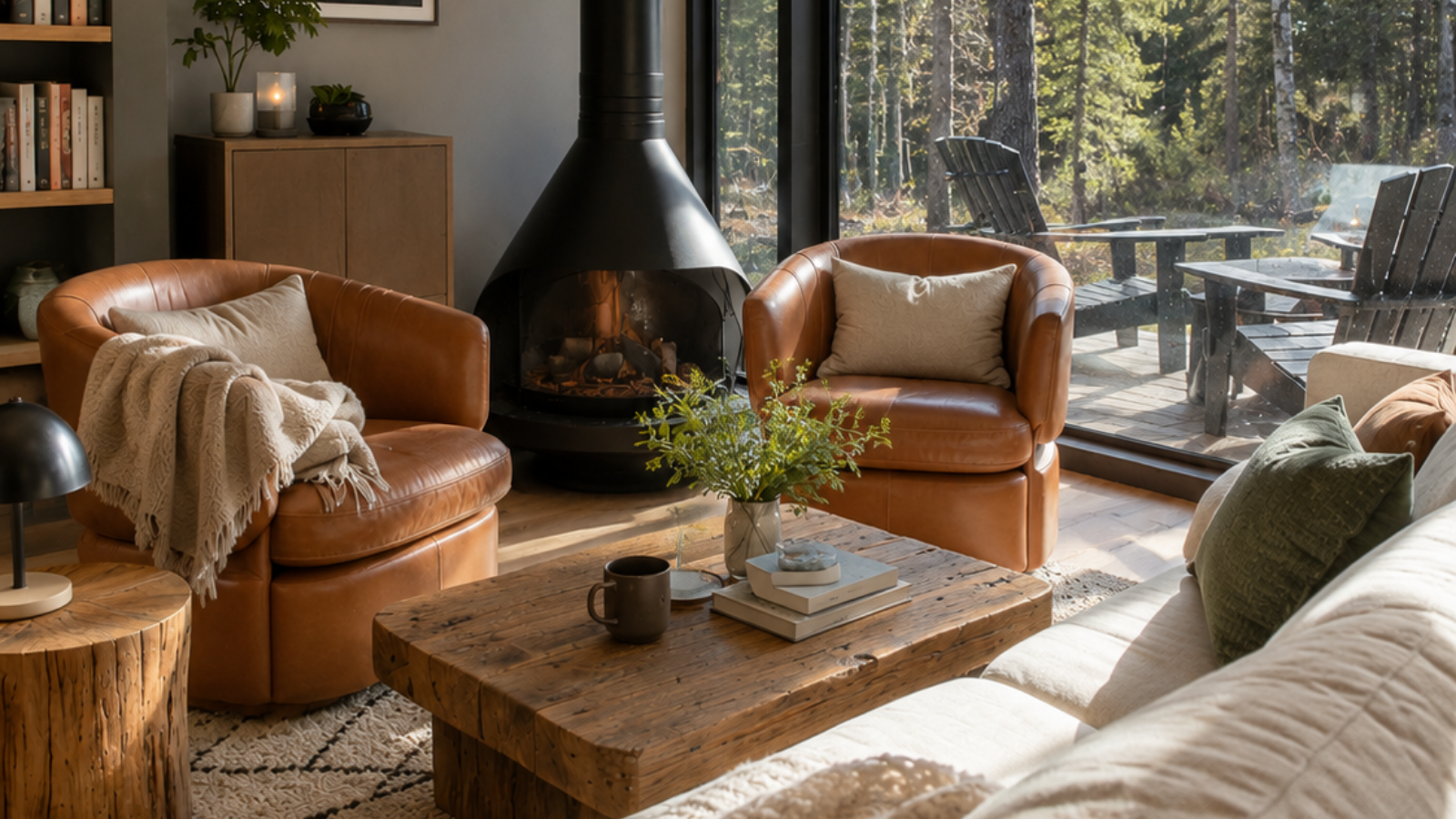
There is a room you have probably walked into — someone else’s home, a hotel lobby, a tucked-away sitting room at the end of a long hallway — and you felt it before you saw it. Hygge Home Decor.
Not beautiful, exactly. Or not only that. Something more specific. Something like ease.
The room was not trying to impress you. It was not arranged for a photograph. It was not following a trend or performing a concept or asking you to notice anything in particular. It was simply a room where someone had made a series of quiet decisions over time: this chair, this lamp, this one rough linen throw across the arm of the sofa. And the accumulation of those decisions had produced something you cannot buy and cannot rush — a room that feels like it has always been there, like it was made for a life, not for a look.
That is what design is moving toward in 2026, and not a moment too soon.
The trend has several names right now. Warm minimalism. Quiet luxury. Curated eclectic. The language differs, but the instinct is the same: fewer things, better things, and an emphasis on how a space feels rather than how it photographs. Interior designers are asking their clients to think less about what is on-trend and more about what is honest. What materials feel good under your hands. What quality of light you want in the morning. What furniture you would keep for twenty years.
This is, quietly, a hygge revolution.
A Hygge Room Is Not a Style.
It is easy to mistake hygge for an aesthetic — the chunky knit blankets, the pillar candles, the sheepskin rug in a Scandinavian palette of cream and birch and dusty slate. Those things are lovely. But they are not the point.
The point of hygge, in the home, is presence. It is the arrangement of a room to support being in it. Not moving through it, not displaying it, not explaining it to anyone — just being in it, slowly, without the low-grade pressure that comes from a space that asks too much of you.
A room that is arranged for presence has a few consistent qualities. It has one place you actually want to sit — not the correct place, not the symmetrical place, but the one with the light behind it and the view of the garden and enough room to put your feet up. It has textures that invite touch: linen, wool, worn wood, smooth stone. It has something living in it — a plant or a bowl of fruit or flowers cut from the garden in a plain glass jar. And it has somewhere for things — not expensive storage systems, but somewhere, so that the surface of the room can breathe.
It does not need to be finished. The best rooms are never quite finished.
The Material Layer: What a Room Feels Like Before You See It
Here is something designers know and most of us have to learn the hard way: a room communicates through texture before it communicates through color or arrangement or furniture style. You register softness and roughness and warmth before you register anything else. This is why a room full of hard, shiny surfaces feels cold no matter what color you paint it, and why a room with a worn wool rug and a linen sofa and a wooden bowl on the table feels habitable before you have even sat down in it.
The materials that read as warm are almost always natural and imperfect. Linen wrinkles and that is part of what it is. Wood has grain and variation. Ceramic is slightly uneven. Wool pills. These are not flaws. They are evidence of the material being real, and the room being lived in rather than staged, and that evidence is precisely what produces the feeling you are after.
If you want to add warmth to a room without touching the furniture or the walls, start with what is underfoot and what is overhead. A rug changes the acoustics of a room — it makes it quieter, closer, more contained. A lamp in a corner with a warm bulb does more for atmosphere than overhead lighting ever will. These are small interventions. They cost less than a sofa and they matter more.
What you are building, material by material, is a room that speaks to the senses before it asks anything of the eyes. A room you can feel your way into in the dark. That is the room that holds people. That is the room people do not want to leave.
Light Is the Room You Actually Live In
No element of a home does more quiet work than light, and no element is more consistently ignored in favor of things that show up in photographs.
The quality of light in a room — its direction, its temperature, its relationship to the time of day — determines almost everything about how the room feels to be in. Morning light coming in low from the east is different from afternoon light bouncing off the wall opposite a west-facing window. Lamplight in the evening, warm and pooled and low, is a different room entirely from the same space under a ceiling fixture. These are not the same room. They share the same square footage, the same furniture, the same objects on the shelves, and they feel nothing alike.
This is why hygge, in its Scandinavian form, relies so heavily on candles. Scandinavia has long winters and short days, and the Danes understood long before anyone coined the word that flame-light is physiologically different from electric light — it is warmer in temperature, it flickers, it draws the eye inward and downward rather than outward and upward, and it produces a quality of attention that is closer to rest than to alertness. You do not plan under candlelight. You settle.
You do not need to fill your house with candles to use this principle. You need to know where the good light in your rooms is at different times of day, and arrange your life around it accordingly. The chair you read in should be where the afternoon sun comes in. The table where you eat dinner should be somewhere a lamp can make it feel like the only lit thing in the room. These decisions are free. They require only attention.
Building the Room Over Time
The rooms that feel most like themselves are never the result of a single decorating session. They are the result of years of small decisions — a chair acquired here, an object collected there, a print that seemed right at the time and has turned out to be permanently right, a vase from a market in a city you loved that somehow makes the whole shelf make sense.
This is good news if your room does not look the way you want it to yet, because it means the goal is not to fix it all at once. The goal is to make one good decision at a time, and let the room become itself gradually, the way people become themselves — through accumulation and revision and the slow clarification of what actually matters to you versus what you thought you were supposed to want.
Buy one thing that is better than what you have instead of two things that are merely fine. Remove something before you add something. Wait until you know rather than deciding because you are impatient. A room can hold a certain amount of uncertainty — an empty wall, a corner that has not figured itself out yet — without being broken. Unfinished is different from wrong.
The rooms that make people stop in doorways are almost never the rooms that tried hardest. They are the rooms where someone trusted their own instincts long enough to find out what those instincts actually were.
One thing that is a must for me is cozy blankets, especially when Summer ends and I spend more time inside. See what you think of this.
What to Do This Week
You do not need to redecorate. You do not need a budget or a plan or a Saturday cleared for furniture rearrangement.
Walk into your living room and look at it the way a stranger might. Find the one thing that is making the room feel heavy or cluttered or performing some purpose it has never really served. Remove it. Not to throw it away — just out of the room, for now, for a week.
Find the one seat in the room that is closest to what you actually want. Move a lamp nearer to it. Put something small and real beside it — a book you are actually reading, a candle, a glass of water.
Sit down.
The Room Was Already There
Notice what the room does now, with less in it and better light and somewhere to actually land. Notice how much quieter it feels. Notice that you feel quieter in it.
That is the room. That has always been the room. It was just waiting for you to make a little space.